Tree Cabling and Bracing in Dundalk, MD
Steel support for a weak fork or a heavy limb on a tree you would rather keep than cut down. We install cabling and bracing on residential lots across the peninsula so a co-dominant stem or long horizontal limb is less likely to tear apart in the next storm.
(443) 272-4579Free estimates. Mon to Sat, 8am to 6pm.
Get a cabling quote
Tell us what the tree is doing and where it sits on the property. We answer during business hours and usually get back to you the same day.
Why Dundalk Homeowners Ask About Tree Cabling and Bracing
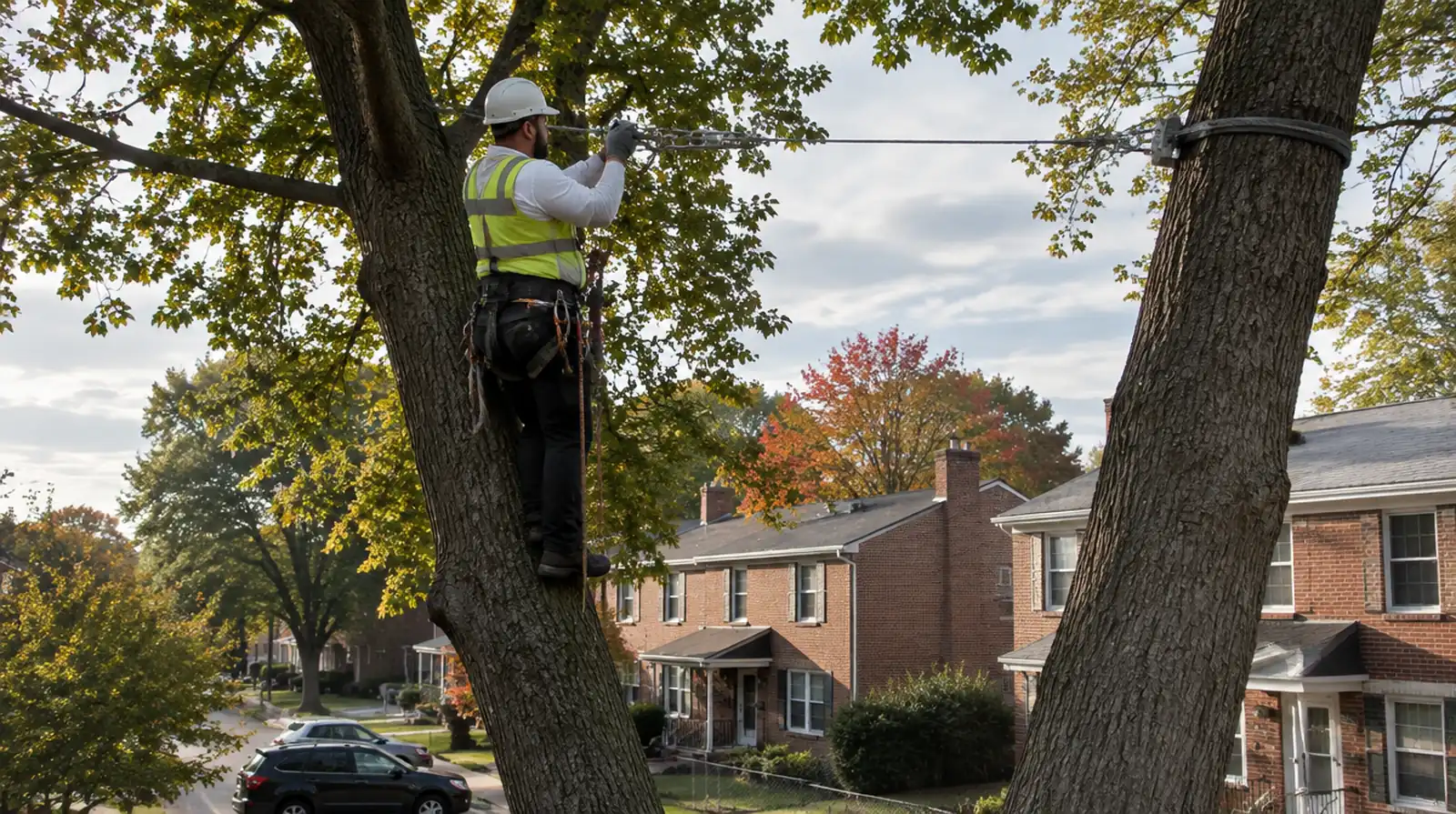
Tree cabling and bracing in Dundalk usually comes up after a scare: a storm rolls through, a big maple in the backyard groans, and somebody notices a crack at the fork that was not there last year. The work adds steel support to a tree that is healthy overall but has one structural weak spot, so a heavy limb or a split trunk has a better chance of riding out the next blow instead of landing on the roof.
There are two tools. Cabling uses a steel cable set up in the crown between two limbs or stems, placed high enough to give it leverage over the weak point below. It hangs with a bit of slack, so on a normal day the tree moves freely; it only goes tight when wind tries to pry the stems apart. Bracing uses solid threaded rods bolted through the wood at the crack or the fork, pinning it so it cannot spread. A badly split trunk often needs rods at the bottom of the split and a cable up top.
Trees on the Peninsula That Tend to Need Help
Walk out and look where the trunk divides. Two stems of nearly the same size with a tight crease of bark buried between them is the classic weak joint. Also watch for a dark seam or open crack below that crease, a half of the crown that rocks on its own in wind, or a long limb stretched over the house, the fence line, or the neighbor's yard.
Many Dundalk streets were planted with trees that grow quickly and get big on small lots. Silver maples behind the rowhomes and duplexes reach well past the roofline. Callery pears that line some blocks were chosen for spring flowers, and their crowded upright branches are known for splitting as they age. Older oaks on the larger lots toward Edgemere and North Point can carry two competing leaders for decades before showing a problem.
Hardware is only part of the answer. Taking weight off the ends of the limbs often relieves most of the strain, and the cable handles what is left. We will tell you the mix that fits your tree.
How a Trunk Ends Up With a Weak Fork
The weakness is set early in a tree's life. If a young tree loses its top or is never pruned to one main stem, two shoots compete for the lead and both keep thickening. The bark between them gets pinched instead of being replaced by connecting wood. The joint looks fine from the street but holds far less than a normal branch attachment, and it gets worse as the stems get heavier.
Weather here finds those joints. Wind off the Patapsco and the open water around Bear Creek has a long, unbroken run at the shoreline neighborhoods. Nor'easters dump wet snow, and summer thunderstorms bring short, violent gusts. Low-lying ground that stays soggy after heavy rain also loosens roots. Cabling can help the crown, but it does nothing for a tree whose roots are letting go, so we always check the base too.
When Removal Beats Hardware
Steel can only hold sound wood. Soft or crumbling wood at the fork, fungus at the base, a hollow trunk, or large dead sections in the crown all mean bolts would be anchored into wood that cannot hold them. That tree is heavier and no safer, and removal is the safer call. If a limb has already broken and is hanging, skip the cabling talk and make a storm call instead.
After an in-person look, you get a straight answer: support the tree, prune it and leave it alone, or plan the removal before the weather decides for you. On a tight Dundalk lot, a mature shade tree is hard to replace, so when the wood is good, keeping it is often worth it.
What Sets the Cost
- The hardware count. One cable between two stems is a quick install; several cables with rods take longer.
- Climbing and access. Anchors go up high, and on narrow lots with fences, sheds and power lines the crew often has to climb and rig instead of using a bucket from the street.
- Pruning on the same visit. Lightening the heavy limbs is commonly done at the same time.
- Checkups later on. The tree grows around the anchors, so the system should be looked at every few years.
The estimate costs nothing and the price holds for the agreed scope. If the climber finds hidden decay once up in the tree, work stops and we talk with you before anything is installed.
Tree Cabling Questions From Dundalk Homeowners
Is the cable noticeable?
The cable runs up in the crown and mostly disappears behind summer leaves. Rods at the fork are easier to spot if you stand underneath.
Does the system need maintenance?
Yes. The steel holds up well, but the stems keep growing, so the anchors and cable tension should be checked every few years.
What about a tree that leans?
A lean caused by a lopsided crown on firm roots can sometimes be helped. A lean with heaved or cracked soil at the base usually means removal.
Point at the fork and we will tell you if support makes sense. Call (443) 272-4579 or send us the details for a free written estimate.